1) Lint filter cleaning (all dryers - every cycle)
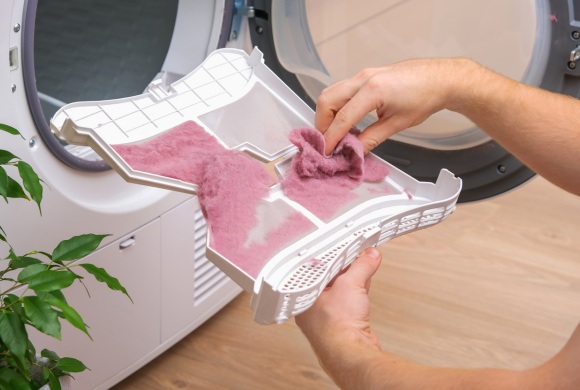
Lint and dust from tumbling fabrics collect in the primary lint filter, typically located in or around the door opening.
Why its worth doing:
- A clogged lint filter increases airflow resistance and reduces airflow through the drum.
- Reduced airflow slows moisture removal, increases cycle duration, and can elevate internal temperatures.
- Dryers include thermal cut-offs, but maintaining free airflow is the primary control for safe heat dissipation.
Quick steps:
- Remove the lint filter and clear lint from the mesh/screen after every use.
- Refit the filter correctly before starting the next cycle.
2) Clean the drying/humidity sensor (all dryers - weekly, or if results are inconsistent)
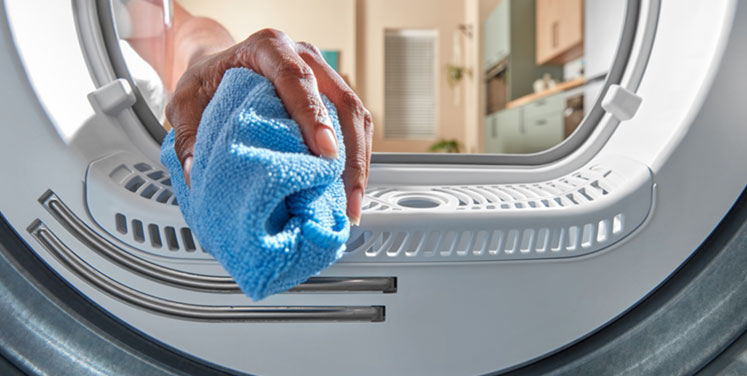
The drying sensor (humidity sensor) is located inside the drum, often below the door opening, and typically consists of two metal strips. It detects remaining moisture by measuring conductivity across damp fabrics.
Why its worth doing:
- Auto cycles ending early with clothing still damp
- Over-drying or unusually long cycles
Quick steps:
- Wipe the sensor strips and adjacent drum area with a damp cloth and a small amount of mild dish soap, or use a cleaning wipe.
- Dry the area afterwards to minimise residue and spotting.
3) Heat exchanger cleaning (condenser tumble dryers only - monthly)
In condenser dryers, warm moist air passes through a heat exchanger where moisture condenses into water. Fibres carried in the airstream gradually accumulate, restricting passages.
Why its worth doing:
- Fouling increases pressure drop across the exchanger, reducing airflow and system efficiency.
- Reduced airflow increases drying time and can raise component thermal load.
Quick steps:
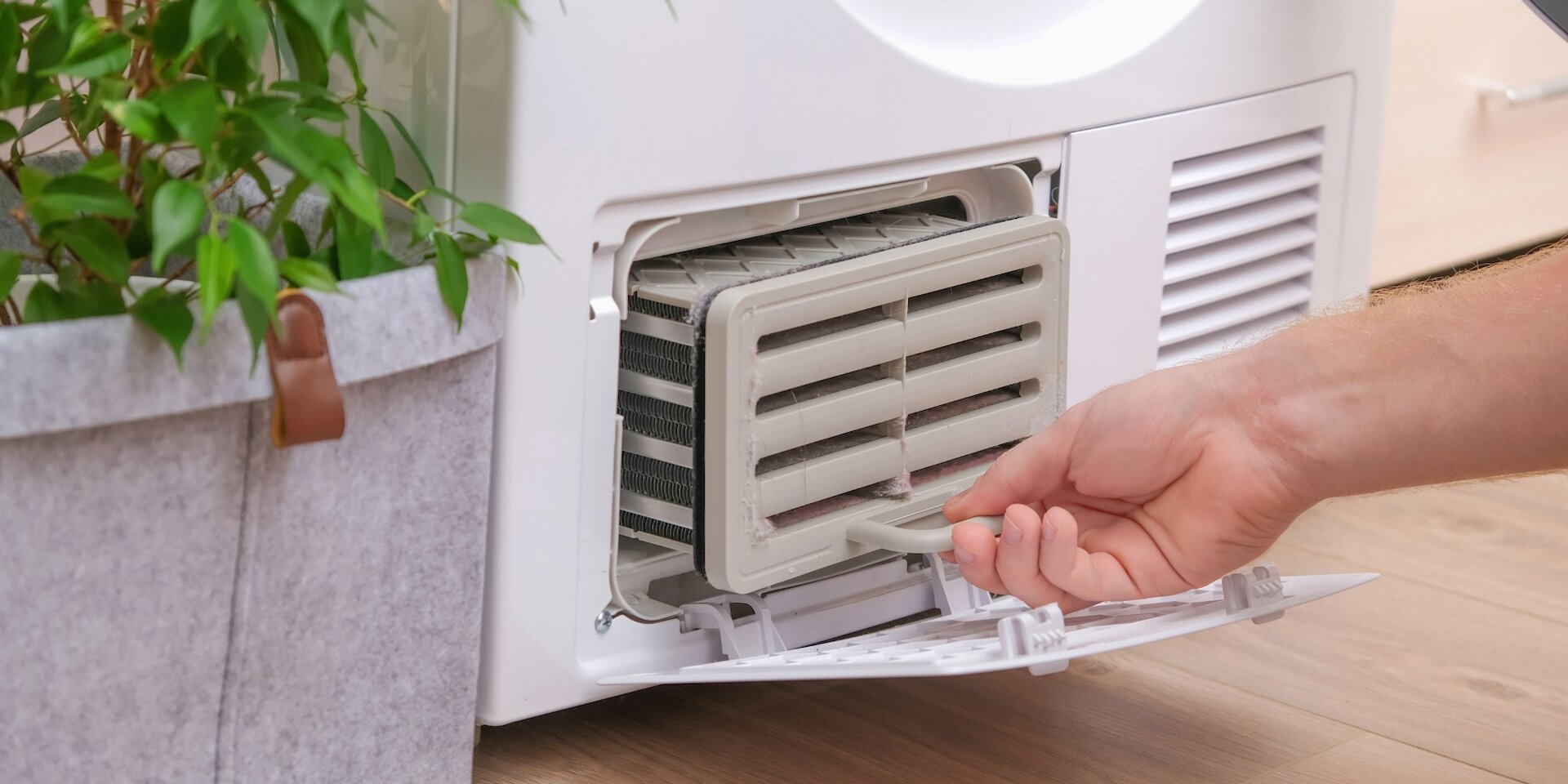
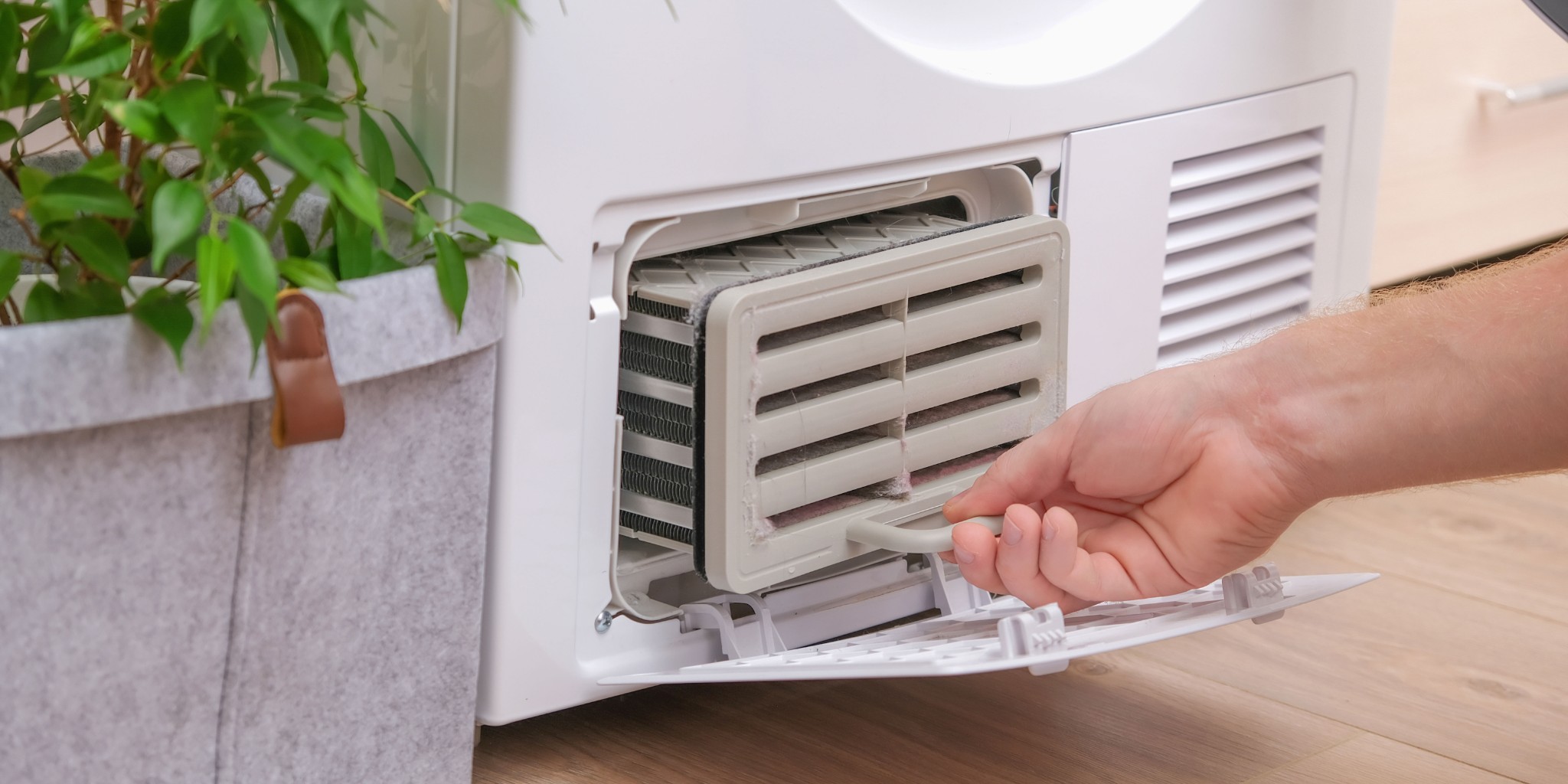
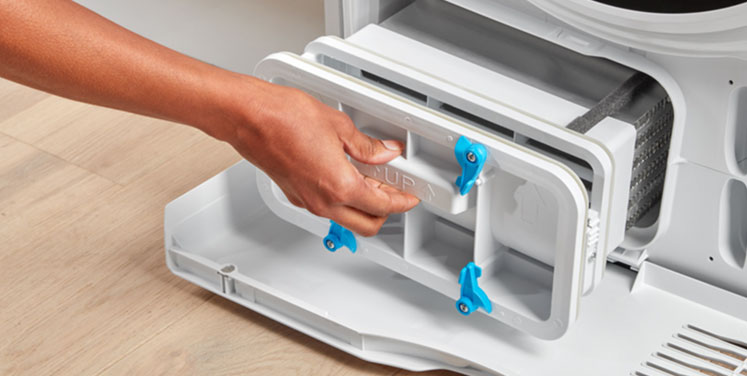
- Locate the heat exchanger at the front of the machine, below the drum, behind a flap/panel.
- Remove the exchanger, clear larger lint deposits by hand, then rinse under a tap to remove remaining debris.
- Allow to drip dry before refitting.
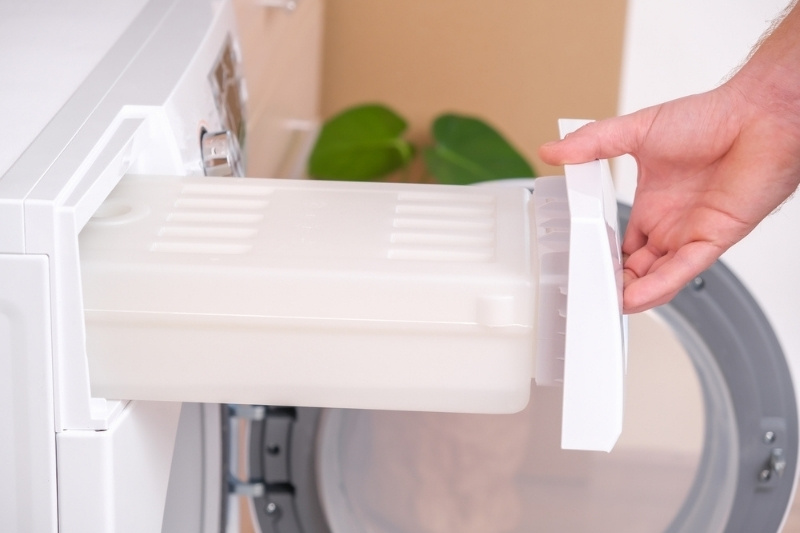
4) Water reservoir emptying (condenser & heat pump tumble dryers — every cycle)
Condenser and heat pump dryers collect condensed water in a reservoir/tank. The tank often holds more than one load’s moisture, but not reliably enough for two consecutive full loads.
Why its worth doing:
- A full reservoir may interrupt operation (mid-cycle stop) or trigger an error/“tank full” condition.
Quick steps:
- Empty the reservoir after every use to ensure uninterrupted operation on the next cycle.
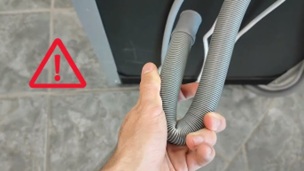
5) Exhaust hose inspection (vented tumble dryers only - monthly/after moving the appliance)
Vented dryers discharge warm damp air through a hose. Kinks or crushing increase back-pressure and reduce airflow.
Why its worth doing:
- Reduced airflow increases drying time and may increase operating temperatures.
- Persistent restriction increases thermal and mechanical stress on the appliance.
Quick steps:
- Pull the dryer forward and visually check the hose isn’t kinked, trapped, or crushed.
- Re-route to maintain the smoothest path possible with minimal bends.
6) Lower filter & evaporator area cleaning (heat pump tumble dryers only - follow manufacturer guidance)
Heat pump dryers can deliver lower running costs, but only if the lower filter and evaporator area are kept clean. If not maintained, performance typically degrades: longer cycles, more moisture released to the room, and higher energy consumption.
Technical rationale
- Blocked lower filtration and dust build-up reduce airflow across the heat pump evaporator.
- Reduced airflow lowers heat pump efficiency and increases cycle time and energy use.
Quick steps (general guidance—always check the manual for your model):
- Locate the lower filter in the bottom corner of the dryer, in front of the heat exchanger/evaporator and behind the kickplate.
- Remove the kickplate and take out the sponge filter; rinse under a tap to remove dust. Let it dry fully before refitting.
- Using vertical strokes, gently brush lint from the evaporator fins (to avoid bending fins), then vacuum up loosened lint/dust.
- Refit the dry sponge filter and replace the kickplate.
Conclusion
If drying times increase or auto cycles become unreliable, diagnose in this order: lint filter → humidity sensor → airflow path (vent hose for vented models, heat exchanger for condenser models, lower filter/evaporator area for heat pump models). Keeping these components clean maintains designed airflow rates and moisture detection accuracy, improving efficiency and helping control operating temperatures.
DID YOU KNOW?
Due to their poorer energy-efficiency, Condenser and Vented tumble dryers are slowly starting to be phased out in the UK from 2025 onwards.
They are still able to be sold, we still have ones available, however, they must comply to strict government guidelines when it comes to energy-efficiency. The government is keen to encourage households to opt for more eco-friendly options, like heat pump dryers.
We have a range of tumble dryers in stock in Shetland listed on our website, available to buy online https://shop.grdirect.co.uk/laundry/tumble-dryers.html or pop along the shop, we’re open Monday to Saturday, 9.00am to 5.00pm.